Tuesday, 12 February 2013

A Holy Figure's Resignation


Many people think that the pope is a national treasure, but many people think that the pope is just an ordinary person like us. In this blog, I am going to talk about the pope's recent resignation, and what I think about it.

On February 10th, the pope, Benedict XVI (Joseph Ratzinger), said that he's going to resign officially as the pope, but he will not step down until the 28th February. Pope Benedict XVI was one of the oldest popes to be elected in history. People all over the world were shocked to hear about his decision. He's the first head of the Catholic church to resign in almost 600 years. The last pope to resign was Pope Gregory XII in 1415. The Pope decided to resign due to his advanced age. He explained that a pope should be healthy in both mind and body, and that he feels unable to fulfill out the responsibilities of the role from now on. 
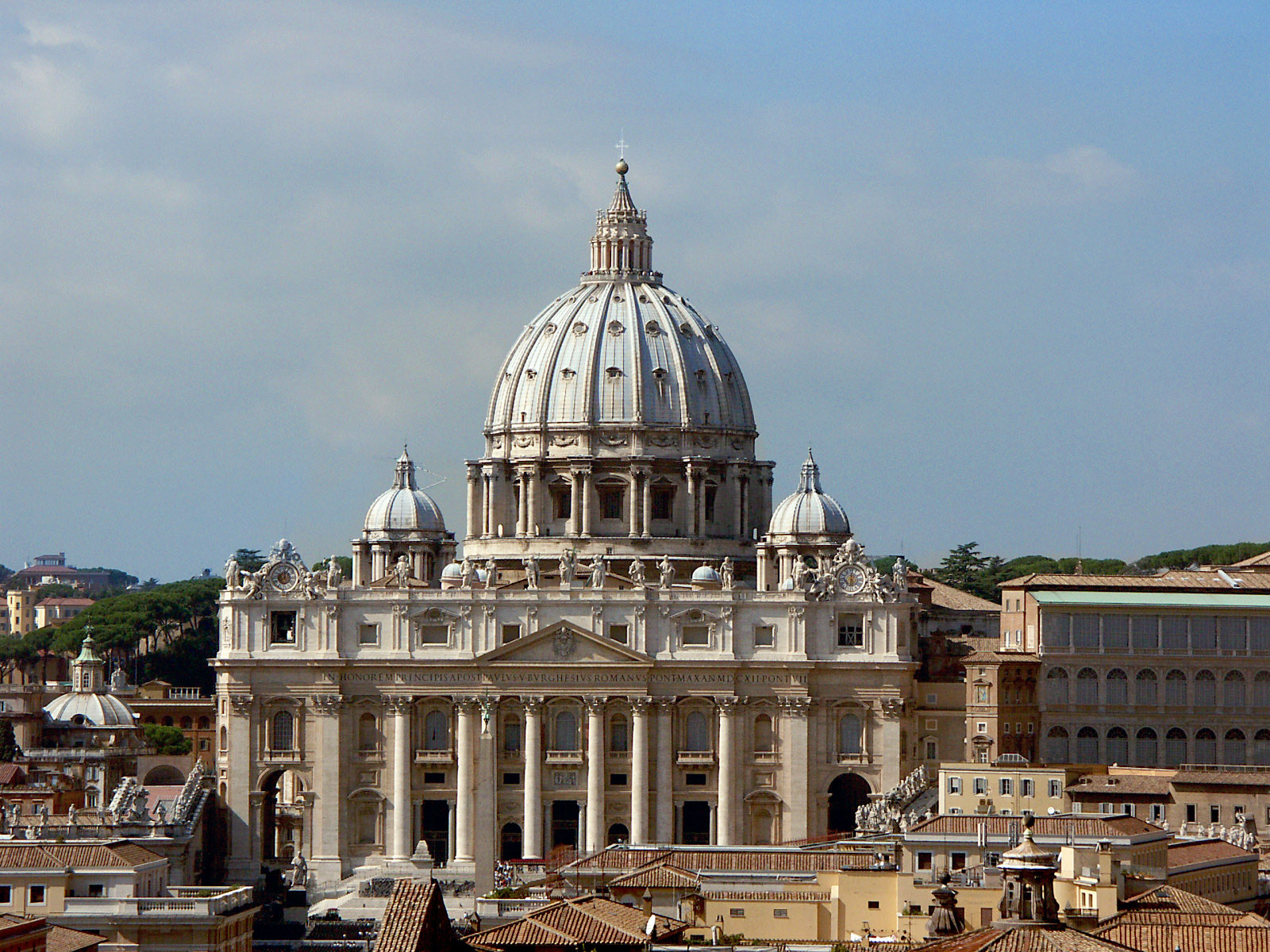
File:Petersdom von Engelsburg gesehen.jpg

Glasgow City Councillor, Gordon Matheson, said "I will never forget the joyful visit to Glasgow 2010, which was a proud day, not only for Glasgow catholics, but for the entire city. Glasgow set the tone for what was a hugely successful state visit to Britain. On behalf of the city, I wish his holiness a sincere and comfortable retirement."

At the end of the day, people may consider the pope a celebrity, or like the queen, a royal figure, but here's what I think: in many ways, the pope is a celebrity. When I look at it, I see that the pope is just like the queen, or Barack Obama, an ordinary person living life the way he wants it.

Q1: What do you think Benedict XVI will do now?
Q2: Do you agree with my views of the pope?
Q3: What were you doing during the papal visit to Britain?

Tuesday, 29 January 2013

New Super Campuses for Glasgow


Education is important for everyone. Here in Glasgow, we have a number of educational institutions, such as City of Glasgow College, Glasgow Caledonian University, Strathclyde University, University of Glasgow, University of the West of Scotland, North Glasgow College, Glasgow School of Art, and the Royal Conservatoire. However, further plans for expansion to City of Glasgow College are in place.

Two new buildings are in the works for City of Glasgow College, Riverside campus and Cathedral Street buildilng. Cathedral Street building will feature an art studio, and two floors of open plan libraries, and a roof-top cafĂ©. It will also have it's own TV and radio broadcast facilities. The Riverside campus will have an 11-storey halls of residence. Currently, City of Glasgow is spread across 11 sites. The Riverside campus will open in 2015, with Cathedral street planned to be opened in 2016, bringing the 11 sites into two campuses. These new state-of-the-art buildings are going to make a big change to the City of Glasgow, but who is funding this new venture?


The European Investment Bank have in principle approved  up to £100 million of financing. Glasgow Learning Quarter are the current preferred bidder to create the campus in the heart of Glasgow. The college is also supported by the Scottish Future's Trust using the new Non-Profit Distribution procurement model, a form of public-private partnership. College Principal Paul Little said "This is a major investment in the new merged college by the Scottish government and the Scottish Futures Trust and, as well as providing an amazing learning opportunity for students, it will positively impact on the economic development of Glasgow."

Construction is planned to start later this year and will act as an enormous to a local business in the building sector and related supply chains thanks to the bidder's committments to supporting local employment and training. Glasgow has sometimes too many colleges already to help students develop their learning, however I think this idea of two new campuses will be a great opportunity for students who live all over Glasgow. I firmly believe what the Prinicpal, Mr. Little, says about positively impacting Glasgow's economic development. I believe the new campuses will help the Glasgow economy, and also the new campuses will attract international students, and students from elsewhere in the UK. All in all, I feel that this development will benefit our city, our people, and stimulate development and growth in the city.

Q1: Do you think this will benefit Glasgow's economic development?
Q2: Do you think that you would go to City of Glasgow College?
Q3: Have you ever been to College or University?


Tuesday, 22 January 2013

Conflict between North and South Mali

In the past, many African countries have had conflict between each other. Currently, there is conflict between forces in northern Mali and governing bodies in Mali. On 14th of January, French forces launched an operation to intervene in the conflict. This resulted in an air strike on radical Islamist forces in Northern Mali.


French authorities now say that the European now has over 2,000 troops in Mali. Soldiers have secured the town of Diabaly, after Islamist militatnts had seized it over a week ago.

Lauren Fabius spoke at a meeting in the Ivory Coast, he focused on discussing other ways that African troops could better aid Mali. Fabius said "Step by step, I think it's a question of some days, some weeks, the African troops will take over."


Bordering countries are expected to contribute around 3,000 troops to the operation aimed at preventing the militants, who ambushed Northern Mali, from adavncing further south towards Banako, the capital.

Tuesday, 15 January 2013

Looking towards next year's Commonwealth Games


With a year to go, Glasgow is already gearing up for the 2014 Commonwealth Games by launching a campaign for volunteers. The organisers of the games are currently campaigning to attract a total of 15,000 people to volunteer in the games. Yesterday alone, a total of 1,500 volunteers signed up to be apart of the games.

The Glasgow games will feature 4,500 athletes in 17 sports in 11 days of competitions, with 261 medal events on show. The 17 sports consist of: Aquatics, Athletics, Badminton, Boxing, Cycling, Gymnastics, Hockey, Judo, Lawn Bowls, Netball, Rugby Sevens, Shooting, Squash, Table Tennis, Triathalon, Weightlifting and Wrestling.

The games are going to be a big part of Glasgow's history, with many local Glaswegians volunteering in order to make the games a success. The application process straight-forward, however, a lot of people will be applying and competing for places as volunteers. Tens of thousands of volunteers will apply to be in the games, but only 25,000 will make it through to interview. The organisers of the Commonwealth games are doing some things differently in their recruitment compared to the 2012 Olympics. For example, volunteers will have the opportunity to write down what are they would prefer to work in as well as what venue they would prefer to work at.

Mark Good from the Evening Times spoke to people in Glasgow to find out whether they would be gearing up to be apart of the 2014 games. A local student said: "Volunteering will be a great opportunity. It will be an honour to take part in some way along with everyone else." A local business worker said "The Games will be a very exciting for Glasgow. They will leave behind a great legacy and something that we can all be proud of."


I am currently thinking about applying to be a volunteer for the Commonwealth Games. I think being apart of the Commonwealth games would be very good experience. I am looking forward to getting involved in the games, because I will see a lot of sports that athletes took part in 2012 Olympics Games last year, but also I look forward to seeing all the new sports at the Commonwealth Games. 

Q1: Do you think Glasgow will do better or worse than London?
Q2: Do you think you might apply to be a volunteer?
Q3: What do you think will be different in the Commonwealth Games when compared to the London Olympics games? 

Friday, 4 January 2013

Scottish Hogmanay Party


Hogmanay is a scots word for the last day of the year. The word, Hogmanay, originally came from scots gaelic, with many customs incoporated from the celtic festival Samhain. There are many customs associated with Hogmanay, but one of the most common is first-footing.

First-footing is a tradition which starts immediately after midnight. It involves being the first person to cross the threshold of a friend or neighbour whilst giving a symbolic gift, such as shortbread, whiskey, black bun, champagne. The first-footing is supposed to set the luck for the rest of the year.

Auld Lang Syne is often sang at Hogmanay all around the world, and comes from Scottish tradition. Auld Lang Syne is a traditional reinterpreted by Robert "Rabbie" Burns. It's often sang with everyone in a cirlce linking arms.


After coming out of such a big year, 2012, I wonder what will be new and different about 2013. In 2012, we had the Olympics, Presidential Elections, Diamond Jubilee and the End of the World (Dec 21st). However, it's now 2013, Hogmanay came around again, and I spent it with my close family and we counted in the new year together.

On Hogmanay, my family usually have an early dinner, with Turkey and all the trimmings. Then at 10pm, everyone gathers in the living room to count in the new year with each other. My parents will often have a wee drink, Mum will have a glass of wine, and Dad will have a beer. There is also plenty of snacks, including filo pastry prawns, duck spring rolls, and pizza bagels. Before the New Year is counted in, we'll all get a drink and then cheers the New Year together. We then, in true Scottish tradition, all sing Auld Lang Syne. After that, some Scottish country music came on and my sister and I did some country dancing. It was a great night and I really enjoyed it.

Q1. What do you do on Hogmanay?
Q2. What do you think 2013 will bring?
Q3. Will 2013 be better than 2012?

Friday, 14 December 2012

MSP's Mission for Safer Pavements


Last night I was looking in the paper and then I came across a story about a Glasgow MSP that wants to stop vehicles from parking on pavements. The article was in the Evening Times, on page 2 and it was written by Stuart Paterson, political correspondent. The article caught my eye because I've seen double parking with my own eyes, and I know how disruptive it can be.


Earlier this year, the Evening Times reported residents in Yorkhill who are frustrated by double parking, cars left on pavements and blocking the way for others. The Glasgow MSP, Sandra White, wants to cut down the amount of cars being parked on the pavements. Sandra has backing from charities that represent visual impaired people and disabled people. A spokeswoman for Guide Dogs Scotland said "I don't there is a malice but inconsideration. The time is right for this..." Ms White has proposed a responsible parking bill to introduce enforcement. She was quoted saying "Pavements are for people, not cars. There are parts of Glasgow that have problems with double parking. If you're blind or in a wheelchair or with a pram, it is ridiculous. It is criminal that you can't walk on pavements." Charities are supporting the plan for this bill in the Scottish Parliament. 

To conclude this story, I would like to give you my thoughts about parking on the pavements. I totally agree with Sandra White, parking on the pavements is a hazard for people with certain disabilities or children. The one thing I don't agree with is on her quotation, I think she was a little bit harsh when she used the word criminal. I agree that it shouldn't be happening, but I don't agree that it's a criminal offence.


Q1. Was it right to call it criminal? 
Q2. Why do you think people park on pavements?
Q3. Would you park on the pavements, knowing it might block pedestrians?

Friday, 7 December 2012

Gordon Lane: The most dangerous lane in Glasgow?

This week, I was reading the newspaper and I came across a really interesting article. The article I read was in the Evening times and was about a particular street in Glasgow. This street is being used for criminal activity. I think that this is tragic because all this crime is going to influence other members of society, especially children. Not only this, but crime makes people feel unsafe. I think people should be able to feel safe in their own city. However, it's clear that if something is not done about the crime, then the problem will only get worse, and the rate of crime will increase.


The street in question in Glasgow is called Gordon Lane. It runs from opposite the Lighthouse and Mitchell Street, onto Gordon Street. It was planned to be used for refuse bins. However, the lane has increasingly been used by convicts. Such as drug dealers, criminals, and drunks. Police figures show that there has been a signifcant number of crimes in the past year. These include the sexual assault of a young woman, possession of drugs, abusive behaviour, fouling, threatening and drinking alcohol.


Here are some of the facts and figures about Glasgow Lane:


  • The area around Gordon Lane had 2305 crimes and offences in 2011-2012.
  • The same area has the second overall crimes in Glasgow:

    • It had 13 robberies.
    • 24 serious assaults.
    • And 248 minor assaults, all of which were in 2011-2012.
    • There were 84 cases of possession of drugs in 2011-2012, which was up from 50 in the year before.
    • There were 18 crimes of indecency in 2011-2012, which was up from 9 the year before.


    In attempt to solve the problem, Glasgow City Councillors have agreed to put gates up on the privately owned lane. I believe that this is a good thing because the gates might help with controlling the crime in the lane, and then the crime might stop. However, these gates now stop people from using the lane, as a shortcut, or tourists, or otherwise. I think that the gates are a good idea, but they may not stop the crime. At the end of the day, people can jump over gates, and if people really want to use the lane for crime then they will, even if it means getting their head stuck in the gate trying to get through.

    All in all, I think the gates are a good idea but I'm not sure if they'll stop the crime. However, something needs to be done about crime in Glasgow as it is obviously getting worse each year.

    Q1. What do you think about crime in Glasgow?
    Q2. Is there something more that the government could do?
    Q3. Do you feel safe in Glasgow?